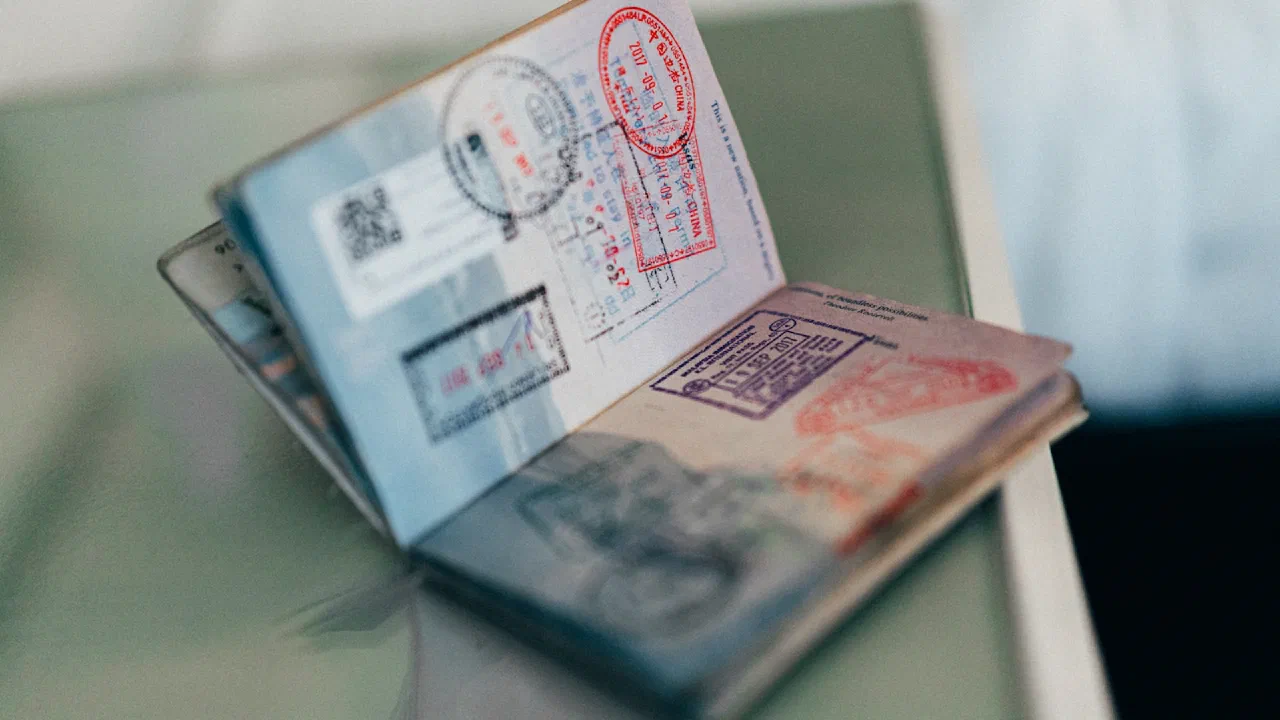
Stop counting forwards from the day you landed. Count backwards from the day you have to have filed something, and give yourself four weeks of margin. The visa-free allowance is not a budget you spend down to zero — it is the runway on which a residence application has to take off, and people who use all ninety days discover that the paperwork they needed took longer than the days they had left.
Checked on 1 September 2026 against the Ministry of Foreign Affairs.
The rule as published
The MFA states the short-stay allowance as up to 90 days within any period of 180 days, from the date of first entry.
Two words in that sentence do the work. Any — the 180-day window is rolling, so it moves with you rather than resetting on a calendar. And first entry — the clock starts at your first crossing, not at your most recent one.
This is what makes the border-run plan fail. Leaving for a weekend and coming back does not hand you a fresh ninety. It hands you the same ninety, minus what you have already used, inside a window that is still sliding along behind you. If you have spent eighty days here in the past six months, you have ten.
Your passport may not get ninety
Do not take the number from a general article, including this one. Check the row for your own nationality on the MFA’s visa regime pages, because the allowances genuinely differ and the difference is large.
The clearest published example: for ordinary Russian passports the MFA’s visa regime page states no visa is required for visits of up to 30 days, while diplomatic and official passports get up to 90. If you are on the 30-day allowance and you planned around ninety, you are three times wrong, and you found out from a blog rather than from a border officer, which is the good version.
There is also a separate route worth knowing. The MFA states that holders of foreign passports who hold a valid visa or residence permit for the Schengen area, the EU or the USA, or a valid UK visa, may enter and stay up to 90 days within a 180-day period without applying for a Serbian visa — but not beyond the expiry date of those visas or permits. That trailing clause is the trap. Your allowance in Serbia inherits the expiry of the document that granted it. A Schengen permit that lapses in six weeks does not give you ninety days.
What the border can ask for
Rarely asked, occasionally decisive. The MFA’s general entry requirements list a valid travel document (or an ID card where a bilateral agreement provides for it), and sufficient funds, which it quantifies as 50 euros per day of stay, proved by cash or a bank statement. It also recommends health insurance covering not less than 20,000 euros for the period of the stay.
Read that as a floor to be able to demonstrate, not a budget to travel on. The practical version: have a card that works, a bank app you can open without wifi, and an insurance certificate as a PDF on your phone. The cost of having them is nothing. The cost of not having them on the one morning it matters is your flight.
Counting it honestly
Keep your own record. The authoritative record is the border’s, not yours, but yours is the one you can consult before you book something.
- Write down every crossing, both directions, on the day it happens. A note on your phone is enough. Reconstructing this later from boarding passes is genuinely awful, and you will need the same information again at year three, when continuous residence toward permanent residence is being assessed.
- Count days present, not nights. Assume partial days at each end count. If the honest answer is “it depends how they count,” you are already too close to the edge.
- Recount every time you re-enter, against the previous 180 days, not against your arrival date. The window moved while you were away.
- Keep the stamps legible. Ask for a stamp if one is not offered on a land crossing. An unstamped entry is a gap you cannot prove either way.
A worked example
Numbers make the rolling window obvious in a way the sentence does not. Take a 90-in-180 allowance and an ordinary year:
| Trip | Days in Serbia | Running total inside the last 180 days |
|---|---|---|
| Arrive 1 March, leave 15 April | 46 | 46 |
| Return 1 May, leave 20 June | 51 | 97 — already over |
That is one spring. Two ordinary stays with a two-week gap between them, and the allowance is gone before summer, because the fortnight away in late April did nothing at all to the count. The 180-day window that began at first entry on 1 March does not close until late August.
Now the version people expect:
| Trip | Days | What they assume | What the rule says |
|---|---|---|---|
| Arrive 1 March, leave 20 May | 81 | 81 used | 81 used |
| Weekend in Sarajevo, return 23 May | — | clock reset to 0 | still 81 used |
| Stay from 23 May | 9 left | 90 fresh days | 9 days |
The weekend did not buy ninety days. It bought a weekend.
Two caveats I am not going to paper over. First, exactly how partial days at each end are counted is not something I will state as a rule, because I have not sourced it — assume both count and stop planning to the last day. Second, the authoritative record is the border’s, not your spreadsheet. Your count is for deciding when to act, not for arguing with anyone.
The day you must act
Here is the part the ninety-day framing hides. Your deadline is not day ninety. It is the day by which a residence application has to be filed, with a complete file, and that day is much earlier than you think for reasons that have nothing to do with the immigration authorities.
The things that take real time are the documents you cannot produce here. Civil-status documents from your home country need to be legalised and translated to be usable, and that round trip is measured in weeks — see apostille and court translation. A lease has to exist and be the right kind of lease. An address registration has to have happened at all, which is the white card. If you are going the self-employment route, the business registration comes first, and that is its own sequence.
So work backwards:
| Working back from your last legal day | What has to be true |
|---|---|
| Day 0 | You are outside the country, or holding something that keeps you legal |
| ~2 weeks before | Application filed, complete, on the portal |
| ~4 weeks before | Address registered; lease signed; basis chosen |
| ~8 weeks before | Foreign documents ordered, apostilled, in transit |
Those are planning margins, not published processing times, and I am labelling them as mine rather than dressing them up as official. The published rules I will state precisely; the padding I will not pretend is a regulation.
The sentence that makes filing early worth it
There is one line on welcometoserbia.gov.rs that changes the shape of this whole problem: “If you submit a timely request for the approval, i.e. extension of temporary residence, you can stay in the Republic of Serbia until the end of the administrative procedure.”
A request filed in time holds you legal while it is being decided. A request filed late does not. That is the entire argument for treating day sixty as your deadline and day ninety as your margin — and it is why “I’ll sort it out at the end” is the most expensive plan on this page.
What visa-free days do not buy you
They do not accrue toward anything. MUP’s continuous-residence definition for permanent residence is built on approved temporary residence or asylum, not on time spent here as a visitor. Three years of careful ninety-day cycling leaves you with exactly what you started with: no permit, no path, and a passport full of stamps that prove you have been managing rather than settling.
If you intend to stay, the ninety days are a runway, not a lifestyle. What you do with them is the route decision, and the specific grounds you can apply on are laid out in privremeni boravak.