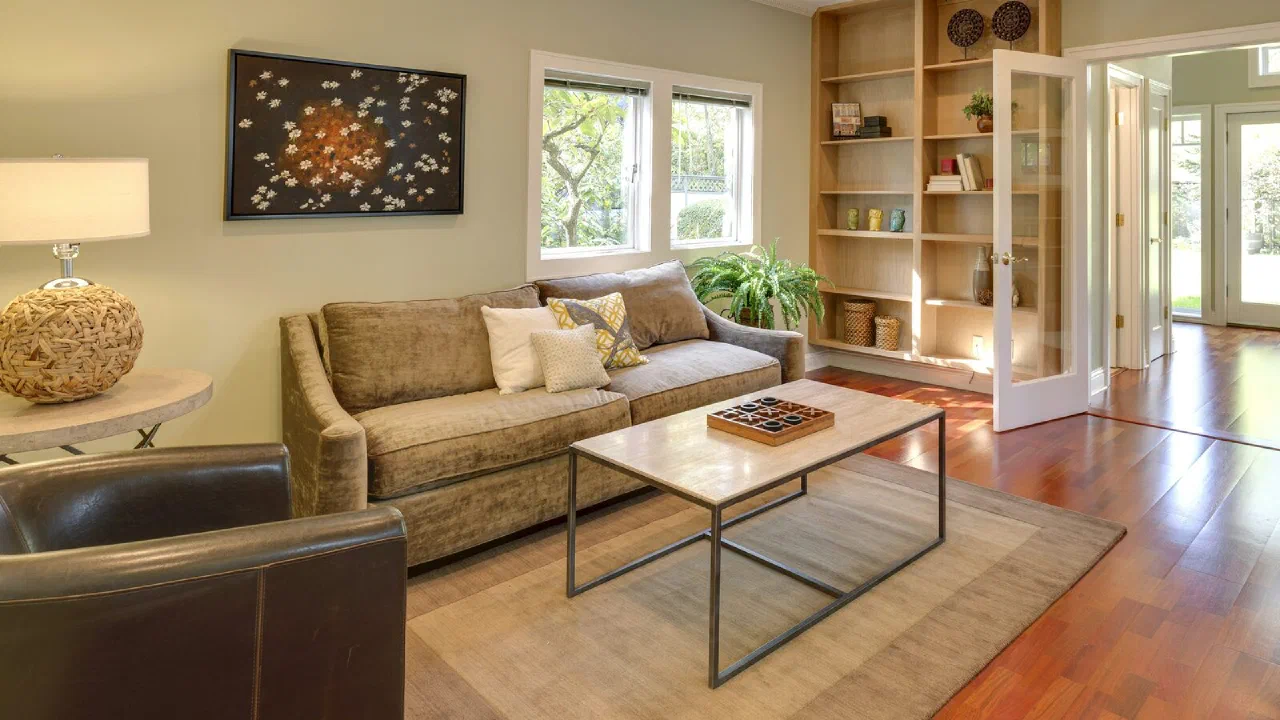
Take the furnished flat if you are here for a year or less, and the unfurnished one if you are here for longer — and in either case assume the listing is describing a kitchen, not a home. The word namešten in a Belgrade listing is a reliable promise about three things and an unreliable one about everything else, and the gap between those two categories is what the first fortnight’s unplanned spending is made of.
This is the least consequential decision in the whole flat hunt and the one most likely to annoy you daily, which is a combination worth five minutes.
Checked on 2 October 2026. Everything here is market norm, not rule.
The three words you will see
Namešten — furnished. Reliably: a bed, a wardrobe, a table and chairs, a sofa, and a kitchen with a cooker and a fridge. Usually: a washing machine. Sometimes: a television, bed linen, crockery, a kettle, an iron, a vacuum cleaner. Almost never: a tumble dryer, a dishwasher, a desk you would work at eight hours a day, or a chair you would sit in while doing it.
Polunamešten — semi-furnished. The kitchen and the built-in cupboards, and then it varies enormously. Some semi-furnished flats have a bed and nothing else; some have everything except the sofa. There is no convention. The listing photographs are the only reliable description, and they are often two tenants old.
Nenamešten — unfurnished. The kitchen units and the bathroom. In Belgrade the kitchen is normally fitted even in an unfurnished flat, which is a meaningful difference from several other European markets, and the cooker and fridge may or may not come with it. Ask specifically about those two.
Whatever the listing says, the inventory annexed to your lease is the document that counts. Reading a Serbian lease, clause by clause covers how to correct the landlord’s version rather than accepting it, and the photographs you take on handover day are what makes the inventory enforceable. Deposits in Belgrade is the reason that matters.
What is usually missing, and what each gap costs you
Not in money — I am not going to invent prices for a kettle — but in effort and in whether you can fix it on arrival:
| Missing | How much of a problem |
|---|---|
| A working desk and a proper chair | The big one if you work from home. Nearly every furnished flat here furnishes a living room, not an office, and a year on a dining chair is a real cost |
| Bed linen, towels, crockery, pans | Trivial money, a tiresome first afternoon. Assume you are buying these |
| A washing machine | Usually present. Where it is not, it is the one item worth negotiating into the lease rather than buying |
| A tumble dryer | Essentially never present. Belgrade dries laundry on balconies and drying racks; plan for that rather than for a dryer |
| Air conditioning | Common but not universal, and the one to check in a summer flat hunt. A July viewing answers it; a January viewing does not |
| Enough storage | Older buildings often have a podrum or ostava — a storage room. Check it is in the contract, not just in the viewing |
| Curtains or blinds | Frequently absent and surprisingly annoying |
The pattern: what is missing is almost always the stuff a landlord does not think of as furniture. The fix is the inventory walk, with the list above in your hand, before you sign.
The inventory walk, in the order to do it
Ten minutes at the viewing, not at the handover, because at the viewing you can still change your mind:
- Open the fridge and turn on a hotplate. Appliances in a long-vacant flat fail quietly.
- Run the hot tap and the shower. How long the water takes to run hot, and whether the pressure survives both at once.
- Find the washing machine. If there is none, ask whether one comes. This is the item landlords most often agree to add.
- Sit where you would work. On the actual chair, at the actual table. This is the test people skip and then regret for a year.
- Open a wardrobe. Storage in older Belgrade flats is tighter than the photographs suggest.
- Ask what goes and what stays. Some furnished flats are furnished with the landlord’s things, and some of those things are leaving. Get the answer into the inventory either way.
Then, whatever was promised verbally, write it into the inventory annexed to the lease before you sign — not into a message afterwards.
Does the furnished premium make sense?
The arithmetic is simple and it turns on one number: how long you are staying.
A year or less: take furnished. Furnishing a flat from nothing costs a multiple of the monthly premium, and you cannot recover much of it when you leave — second-hand furniture sells badly everywhere, and you will be selling it in a hurry. Add the delivery, the assembly, the week of sitting on the floor, and the fact that the arrival fortnight is already three to four times a normal month once the deposit and the commission are in it. The setup cost is where that total lives.
Two years or more: unfurnished starts to win, if the rent gap is real and you actually want to choose your own things. Buy the bed and the desk properly and treat the rest as replaceable. The break-even is sensitive to the gap between the two rents in the same building — compare like for like rather than comparing an unfurnished flat in one municipality with a furnished one in another, which is a neighbourhood comparison wearing a furnishing costume. The neighbourhood decision, priced is the other half of that.
And the case for furnished regardless of length: it is far easier to leave. A tenancy you can end with a suitcase is worth something that does not show up in the monthly figure, particularly if your residence basis is still settling. Renewal is the point at which people discover whether their housing was a commitment or an option.
Two things that actually matter more
Both are invisible in the furnishing description and both will shape your year more than the sofa:
Heating type. Daljinsko grejanje — district heating, billed through Infostan — against etažno, your own boiler with the cost on the electricity bill. Two flats at the same rent are not the same flat in January. Heating type as a rent decision is the arithmetic, and the bills at handover is where it shows up.
The floor, the lift and the noise. A fifth-floor flat in a building whose lift is out is a different flat. A flat facing a boulevard is a different flat in summer, when the windows are open. Noise, the floor and the lift takes it properly.
If you have to choose between a better-furnished flat and a better-heated, quieter one at the same price, take the second. Furniture is a one-time afternoon; heating and noise are every day.
What I would actually do
Take the furnished flat, correct the inventory hard, negotiate the washing machine in if it is missing, and budget one deliberate purchase: a desk and a chair you can work at. That is the item that makes the difference between a flat you tolerate and a flat you can live a working year in, and it is the one thing no Belgrade landlord will furnish for you.
What is convention here, and what is a rule
- What namešten, polunamešten and nenamešten include — market convention with no standard and no authority behind it. The inventory in your lease is the only binding description.
- Furnished-versus-unfurnished rent gaps — market norms, wide variance, no published figure. Compare two flats in the same building if you want a real number.
- Appliance and furniture prices — these move; price them yourself the week you need them rather than trusting a figure in a post.
Nothing here is a product recommendation, and nothing on this site is paid for.